WhatsApp
Guide 01
How To Choose The Right Watch
Three decisions do most of the work: the size of the case, what sits on your wrist, and how the dial reads at a glance.
Start with the case
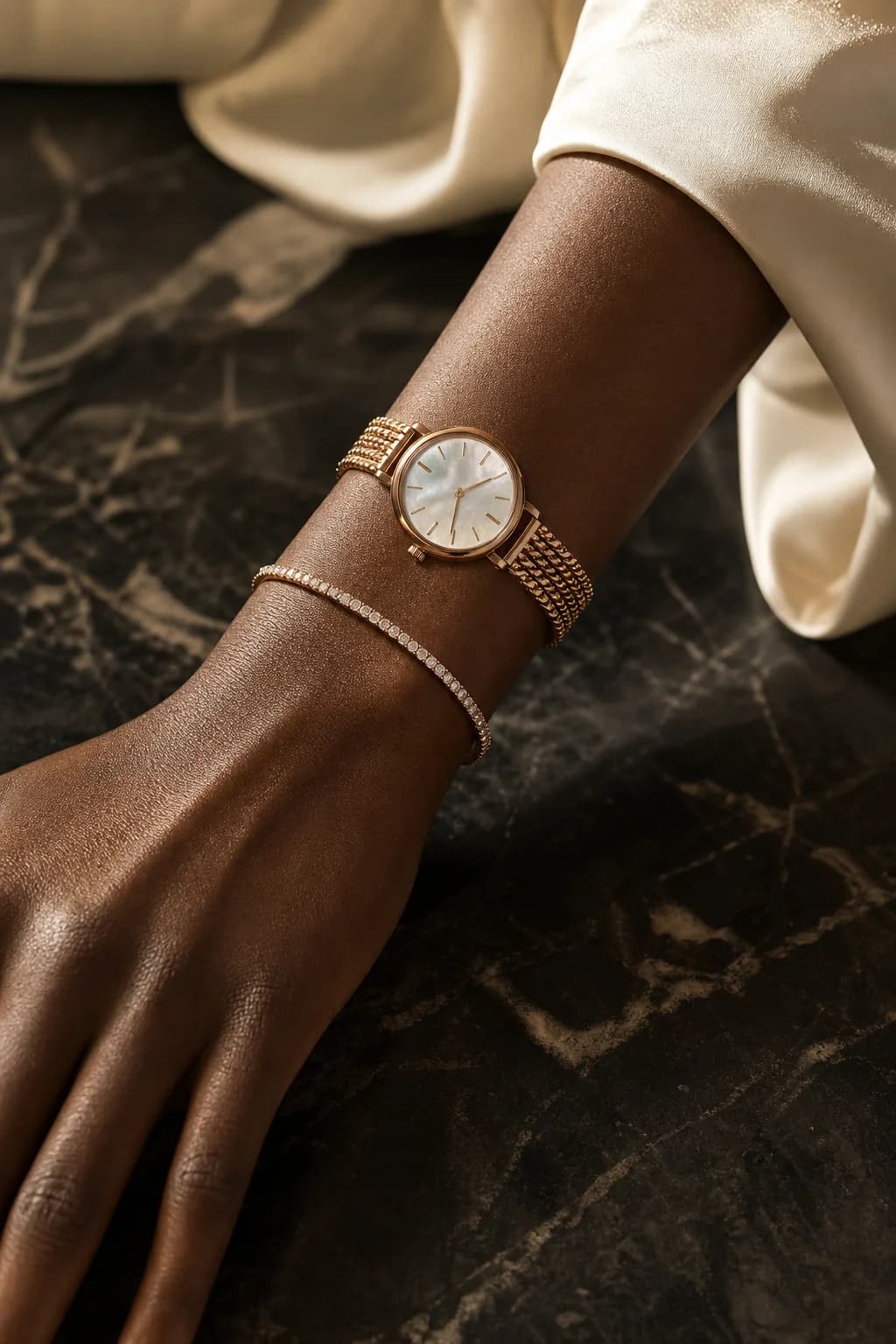
Case diameter is the single biggest factor in how a watch wears. Slimmer wrists are usually flattered by smaller cases; broader wrists carry larger ones comfortably. If a watch overhangs the edge of your wrist, it is too big — no matter how good it looks in a photograph.
Case thickness matters just as much. A thinner case slips under a shirt cuff; a thicker sports case sits proud and reads as more casual.
Then the strap or bracelet
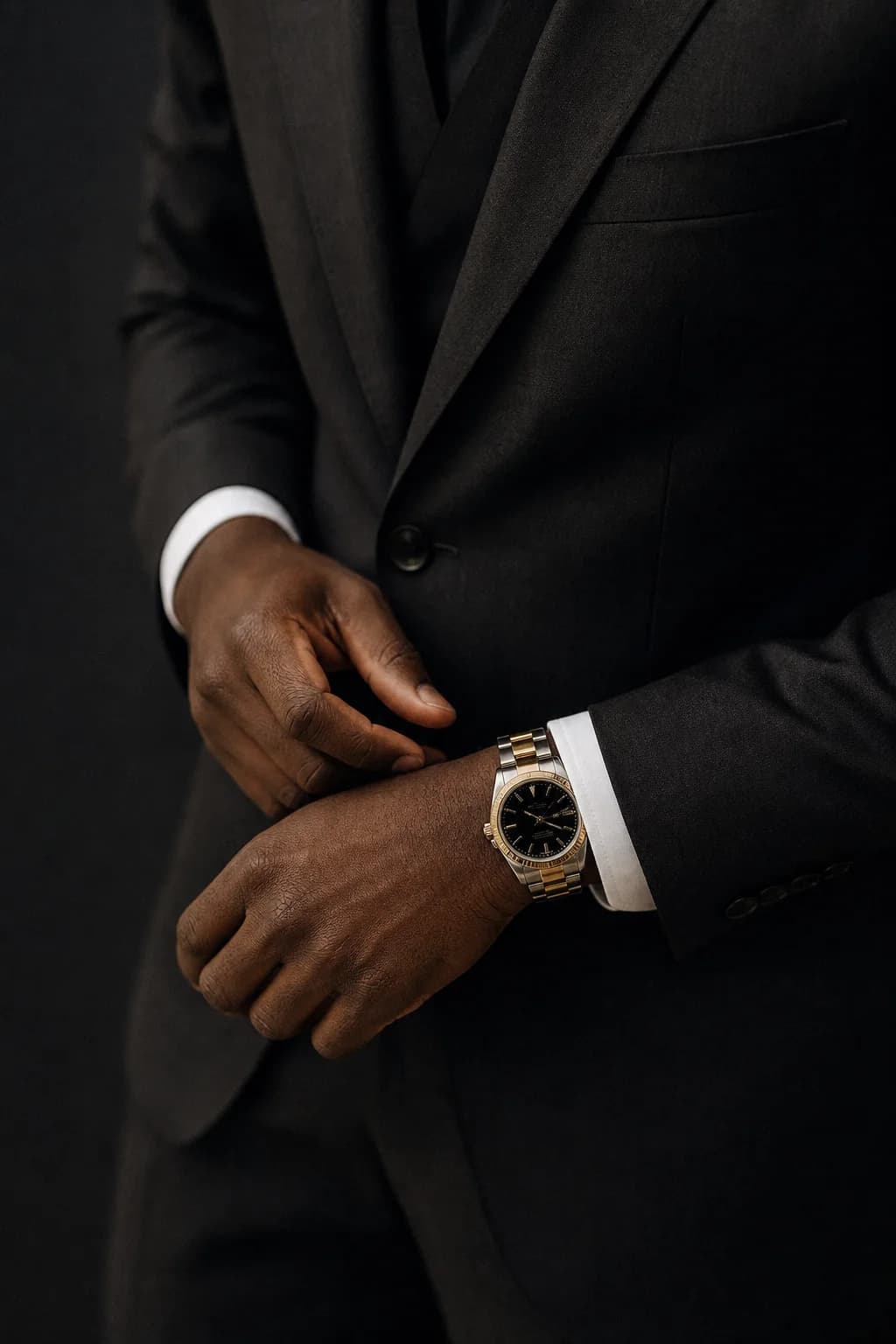
A metal bracelet reads formal and substantial. Leather is softer, warmer and dresses down more easily. Rubber and silicone are the most casual and the most forgiving in heat.
Match the metal tone to what you already wear. If your everyday jewellery is gold, a gold-tone case will sit more naturally than steel.
Finally, the dial
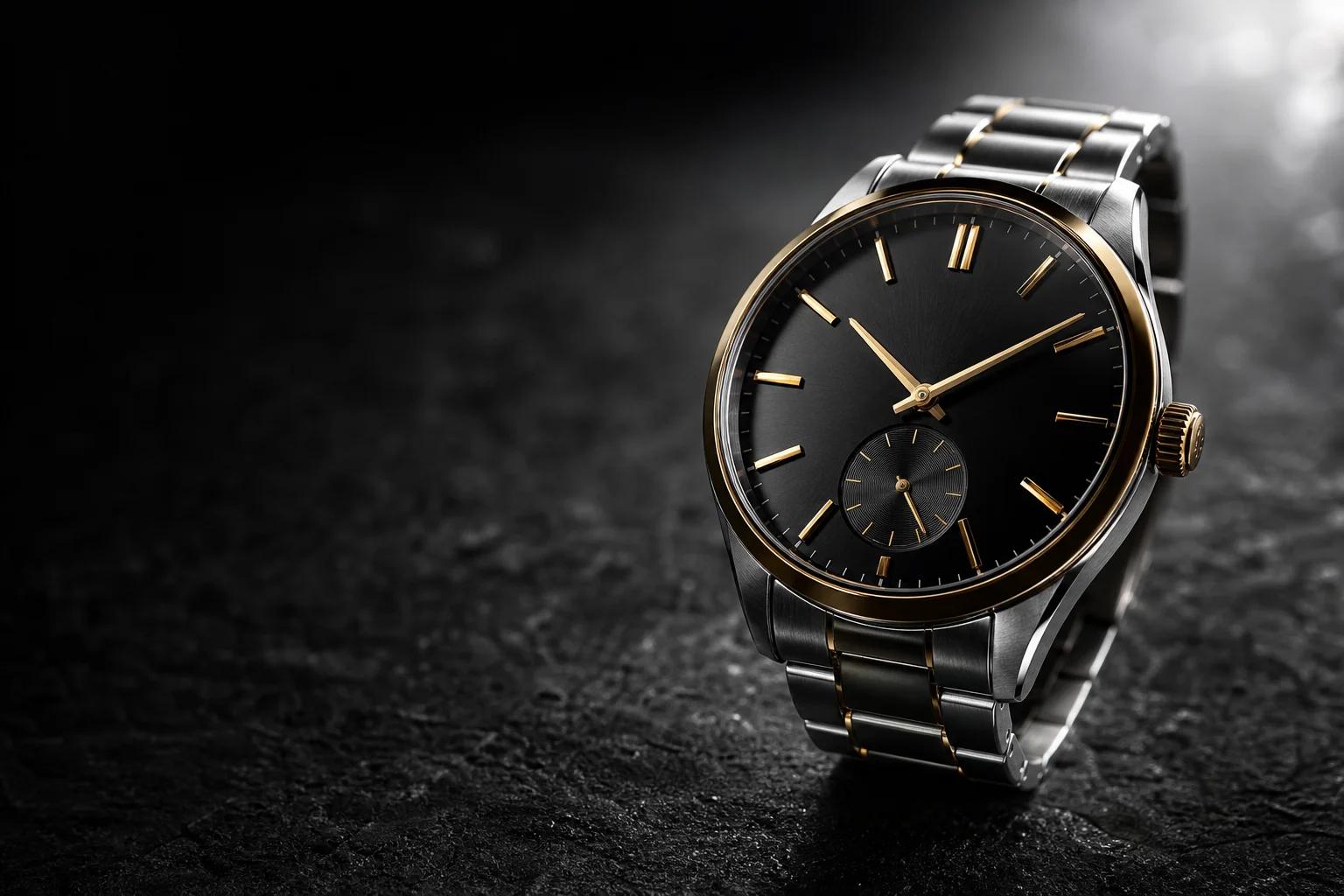
A clean dial with strong contrast is the most versatile thing you can own — it reads instantly and goes with everything. Busier dials with chronograph sub-registers or skeleton work make more of a statement and demand more attention.
If this is your first good watch, start restrained. You can always add the statement piece later.